Who it works for
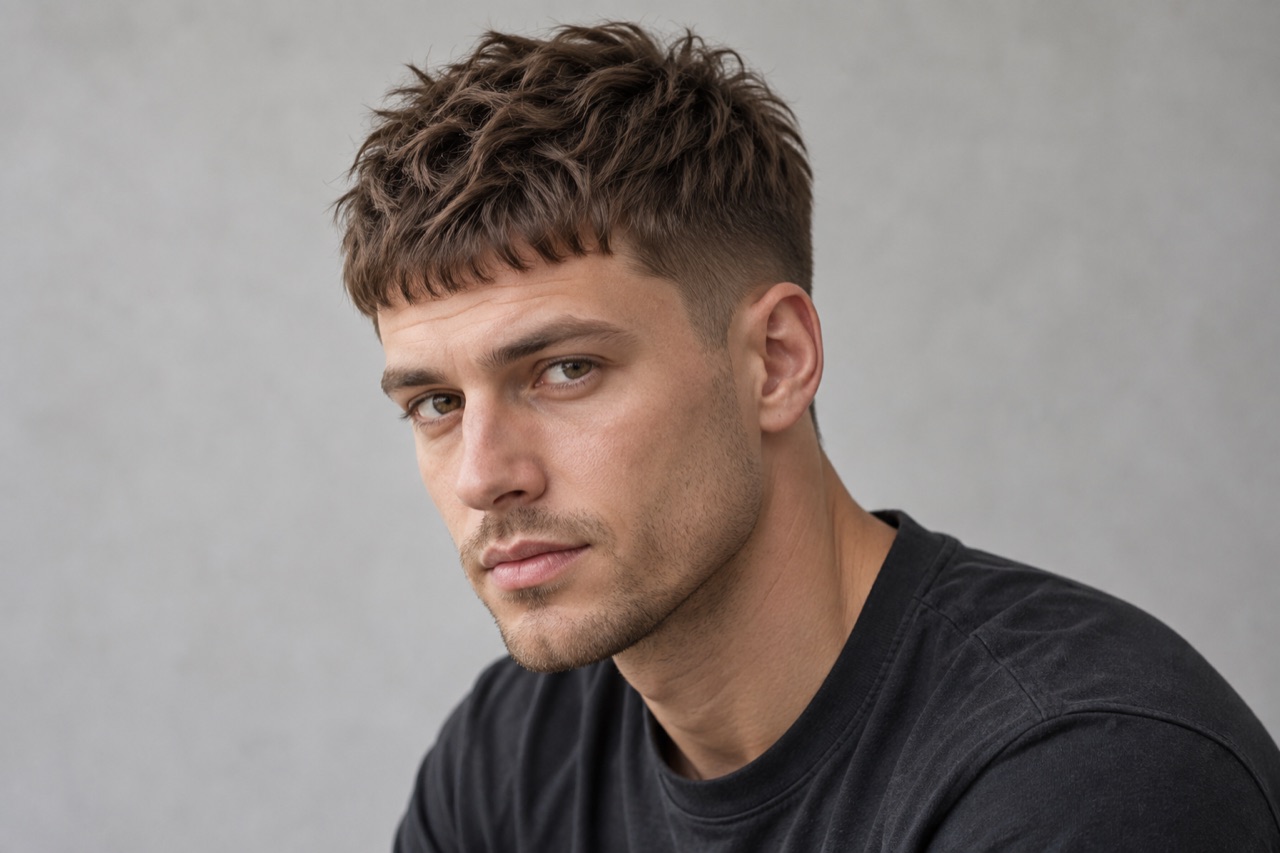
This cut works well when you want a short shape that still shows strand separation rather than one uniform clipper length. Straight hair can reveal piecey texture with minimal effort; waves add natural movement. Fine hair should keep enough length and avoid over-thinning, while dense hair may benefit from internal weight control. If you rarely use product, ask for texture created by the cut instead of a finish that depends on wax. If you want a stronger change, first decide how much length and scalp exposure you are comfortable with rather than assuming shorter always looks cleaner. Whether you blow-dry, wear a cap or helmet, and can return for edge cleanup all affect the practical fit. Texture and cowlicks are cutting conditions to work with, not flaws that must be hidden.
How to choose
The key variables are top length, piece separation and fringe direction. A short top appears cleaner but offers fewer styling changes; a longer top gives more texture yet may collapse without drying. Compare whether the fringe sits above the brow, touches it or breaks into small points. Review the front and crown in the same light because strong shadows can make a modest texture look much sharper than it is. Put the reference beside your own front, side and back views and compare the outline, fringe or hairline boundary rather than the model's facial features. Pick the closest structural change, then decide how much daily styling and grow-out effort you are willing to accept.
Before the appointment
Bring a photo with the top dry and visible, then tell the barber how much forehead you want covered. Ask for the fringe shape and top texture separately, and state whether the sides should be scissor-cut, tapered or faded. If you have a crown whorl, point it out; a crop that looks even in a reference can split or stand up around a strong growth pattern. Save one image you like and one counterexample, and be ready to explain the exact difference. Before the cut, confirm the dry length, wash-day direction and sections that must remain. An AI preview helps compare visual directions; it cannot replace a real consultation or establish a barber's cutting plan.
Living with the look
Most textured crops can be reset with fingers and a small amount of matte product, but not every hair type needs product. Start with dry texture and add only enough to separate pieces; too much paste can make short hair look greasy or spiky. Keep the fringe from crossing into the eyes and check the crown after washing. The outline softens as it grows, so choose cleanup frequency based on how crisp you want the short sides. Daily care should support the actual textured crop structure, not reproduce a photographed finish. Start with a small amount of a tool or product suited to your texture; if one side grows faster, clean up that area instead of shortening everything. Set a trim rhythm by how crisp you want the outline to remain, not by a universal schedule.
Real limitations
Texture does not create extra hair or conceal every sparse area. Very fine hair can separate too much if the top is over-layered; dense straight hair may need active styling to hold piece definition. A crop also exposes more of the forehead than a longer fringe in some versions. AI cannot predict a cowlick, exact density or how products feel on your scalp, so use the preview to compare shape only. A real result also depends on length, growth direction, curl spring, head shape and the person cutting it. AI cannot guarantee a haircut or chemical service, or predict the exact result after washing, humidity or a full day. Treat the preview as a communication sketch; base the final plan on your own hair and an in-person assessment.
Mistakes to avoid
Do not ask for a textured crop while pointing to a smooth, long French fringe or a tall quiff. Those references change the haircut's main silhouette. Another mistake is requesting maximum texture without deciding how much length can be removed. Name the fringe endpoint, top length and side finish individually, then select whether a low-effort or high-definition result matters more to you. Another common mistake is naming the cut without specifying its top, edge and side treatment. Before deciding, repeat back the version you chose, how much time you will spend styling it and which length must stay. A polished reference photo is a starting point for questions, not a promise of identical hair.