Find your starting pointSix face-shape directions
Face shape is only one clue. Use the closest description as a starting point, then account for your hairline, texture, density, and preferred upkeep.
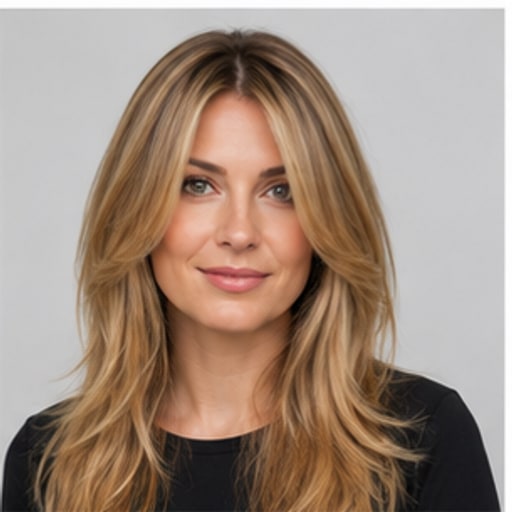 Round face
- Visible clues
- The visible length and width are similar, with fuller cheeks and a softer jawline.
- Useful directions
- Try vertical movement, controlled side width, airy layers, or an off-center part.
- Keep in mind
- Avoid assuming every rounded face needs height; keep the result proportional to your features.
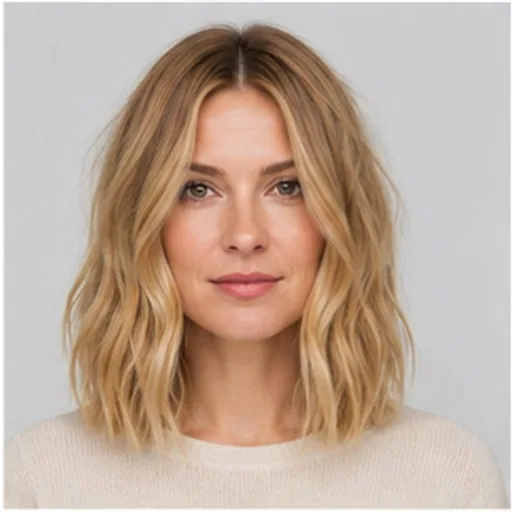 Oval face
- Visible clues
- The face appears longer than it is wide, with a gently rounded jaw and balanced forehead.
- Useful directions
- Most lengths can work; compare where the fringe, layers, and ends place visual emphasis.
- Keep in mind
- Versatility does not mean every style has the same upkeep or works with every texture.
 Square face
- Visible clues
- The forehead, cheek area, and jaw appear similar in width, with a more defined jawline.
- Useful directions
- Use movement, curved lines, soft texture, or an offset part when you want a gentler frame.
- Keep in mind
- A strong jaw does not need to be hidden; sleek and geometric shapes can also look intentional.
 Heart-shaped face
- Visible clues
- The forehead and cheek area appear wider, narrowing toward a smaller or more pointed chin.
- Useful directions
- Balance the lower face with cheek-to-jaw movement, side-swept fringe, or fullness near the ends.
- Keep in mind
- Very heavy crown width may overemphasize the upper face unless the lower silhouette balances it.
 Long face
- Visible clues
- The visible face length is noticeably greater than its width, often with straighter side lines.
- Useful directions
- Explore width around the cheeks, fringe, waves, or medium lengths that interrupt a long vertical line.
- Keep in mind
- Excessive height and very flat, extra-long lengths can add more visual length when that is not your goal.
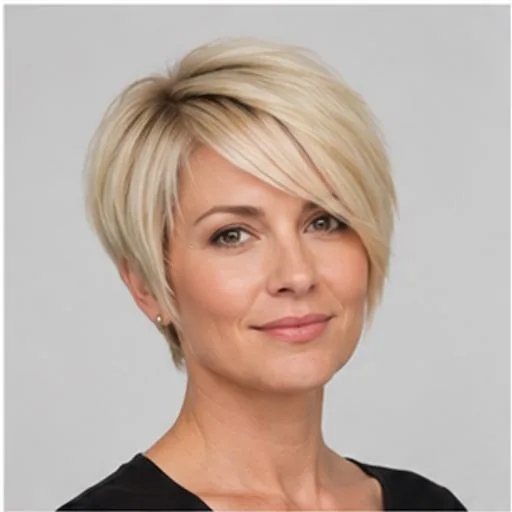 Diamond face
- Visible clues
- The cheekbones appear widest, while the forehead and jaw are visibly narrower.
- Useful directions
- Try side-swept framing, softness near the forehead or jaw, and controlled volume at the cheeks.
- Keep in mind
- Avoid concentrating all volume at the cheekbones if you want a more evenly balanced outline.
Choose more confidentlyCommon face-shape mistakes
A face-shape label should narrow useful options, not turn into a rigid rule.
01Treating one photo as a diagnosis
Camera distance, angle, expression, and hair coverage can change visible proportions. Compare a clear front-facing photo with what you see in a mirror.
02Ignoring hair texture and density
A flattering outline still needs to work with your real curl pattern, volume, hairline, and current length.
03Copying a style without its structure
Look beyond the name. Check fringe openness, crown volume, side width, layers, and where the ends sit.
04Changing everything at once
Preview two or three controlled directions on the same photo so you can see which change actually helps.
FAQ
Questions about face shape and hairstyles
How do I know my face shape?+
Use a clear, front-facing photo and compare the visible width of the forehead, cheeks, and jaw with the apparent face length. Many people sit between two categories, which is normal.
Does face shape decide which haircut I am allowed to wear?+
No. It is a planning aid, not a rule. Personal taste, hair texture, density, hairline, maintenance, and how you want to present yourself matter just as much.
Should I hide the widest part of my face?+
Not automatically. The goal is usually balance and intentional framing. Sometimes showing the face clearly looks better than covering it with heavy hair.
Can an AI preview guarantee a salon result?+
No. A preview helps compare visual directions. Real results still depend on your current hair, texture, condition, the cut, and daily styling.
Face-shape hairstyle guideNot sure which face-shape direction is closest?
Upload one clear photo for a personalized analysis, or start with a hairstyle you already like and compare it on yourself.