Who it works for
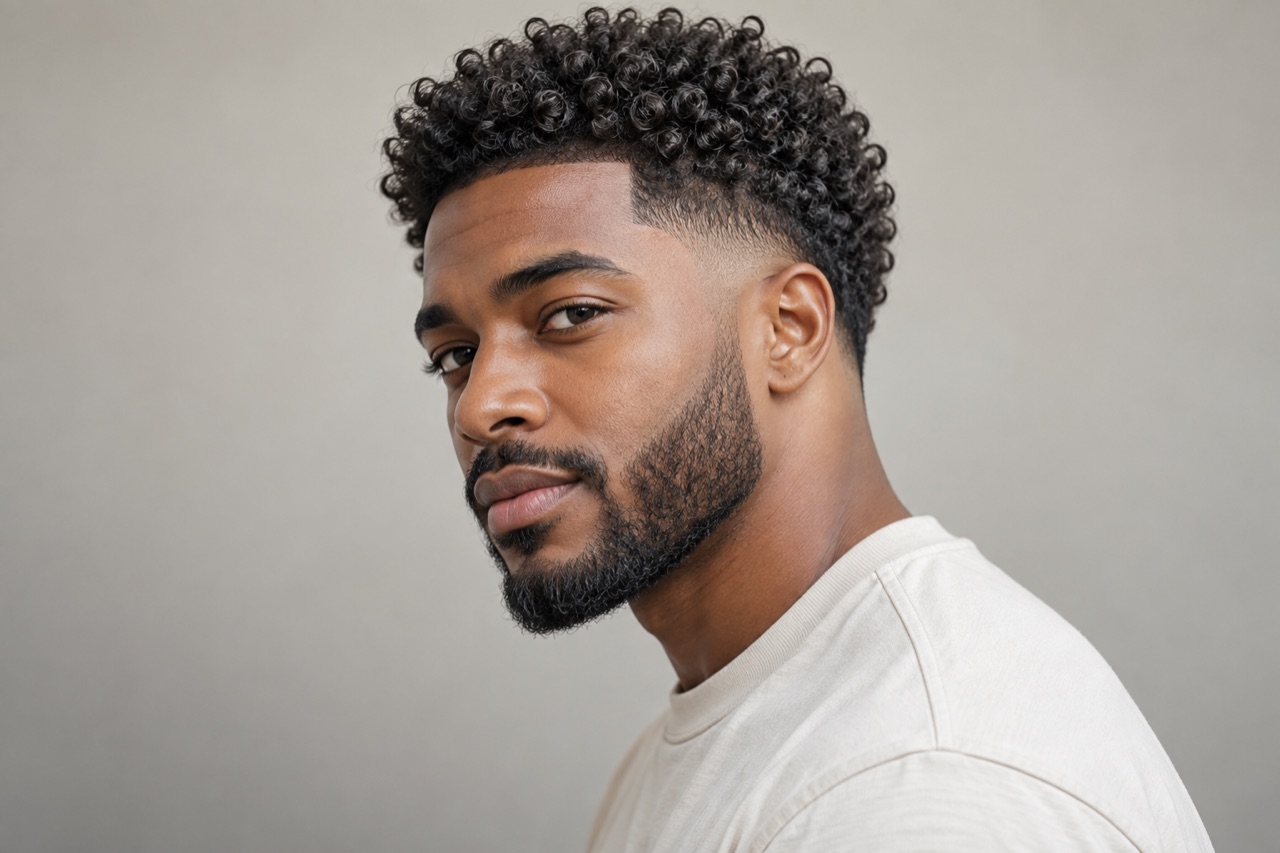
It is designed for someone who wants defined curls and a neater perimeter at the same time. Tight coils, loose curls and mixed patterns need different dry lengths because shrinkage varies. A low taper preserves more side coverage; a higher fade brings the curl top forward visually but exposes more scalp. If your curls are still growing, shape the outline conservatively rather than cutting away length needed for definition. If you want a stronger change, first decide how much length and scalp exposure you are comfortable with rather than assuming shorter always looks cleaner. Whether you blow-dry, wear a cap or helmet, and can return for edge cleanup all affect the practical fit. Texture and cowlicks are cutting conditions to work with, not flaws that must be hidden.
How to choose
Compare the curl top while dry, then inspect how high the taper travels from the sideburn and nape. A compact low blend leaves the curl pattern visible at the temple; a higher fade creates a stronger clean-to-curly contrast. Decide whether curls sit short and close, medium with spring, or longer and rounded. Check the back because curl density can make a fade look uneven around the occipital area. Put the reference beside your own front, side and back views and compare the outline, fringe or hairline boundary rather than the model's facial features. Pick the closest structural change, then decide how much daily styling and grow-out effort you are willing to accept.
Before the appointment
Take front, side and back photos after your normal wash-and-dry routine, without stretching the curls. Tell the barber how much shrinkage appears and whether you want to keep side curls above the ear. Ask for the taper boundary to be shown before it is raised. If you use a curl cream or sponge, explain that routine so the top is cut for the way you actually wear it. Save one image you like and one counterexample, and be ready to explain the exact difference. Before the cut, confirm the dry length, wash-day direction and sections that must remain. An AI preview helps compare visual directions; it cannot replace a real consultation or establish a barber's cutting plan.
Living with the look
Keep the curl top conditioned and detangled according to its texture; rough brushing dry curls can disrupt the clumps. Refresh with water or a light curl product rather than layering heavy cream. The faded perimeter needs separate cleanup as it grows, while the curl shape may benefit from less frequent reshaping. Protect very short exposed areas from strong sun and ask about a trim cadence that preserves curl length. Daily care should support the actual curly taper fade structure, not reproduce a photographed finish. Start with a small amount of a tool or product suited to your texture; if one side grows faster, clean up that area instead of shortening everything. Set a trim rhythm by how crisp you want the outline to remain, not by a universal schedule.
Real limitations
A reference with stretched, defined curls may not match the same hair air-dried. Shrinkage changes the finished length, and mixed curl patterns can make one side appear shorter. A higher fade does not solve dryness or create curl definition. AI cannot model each curl group or predict a real chemical/heat service; use it to compare silhouette, then agree on dry cutting and curl handling with a qualified barber or stylist. A real result also depends on length, growth direction, curl spring, head shape and the person cutting it. AI cannot guarantee a haircut or chemical service, or predict the exact result after washing, humidity or a full day. Treat the preview as a communication sketch; base the final plan on your own hair and an in-person assessment.
Mistakes to avoid
Do not ask only for a fade and leave the curl top unspecified; the top length and curl grouping are half of the look. A straight-hair fade reference also cannot show how your curls will spring after a cut. Avoid thinning every curl for less bulk, because broken curl groups may frizz. State the taper height, side-curl coverage and top shape before deciding how sharp the outline should be. Another common mistake is naming the cut without specifying its top, edge and side treatment. Before deciding, repeat back the version you chose, how much time you will spend styling it and which length must stay. A polished reference photo is a starting point for questions, not a promise of identical hair.