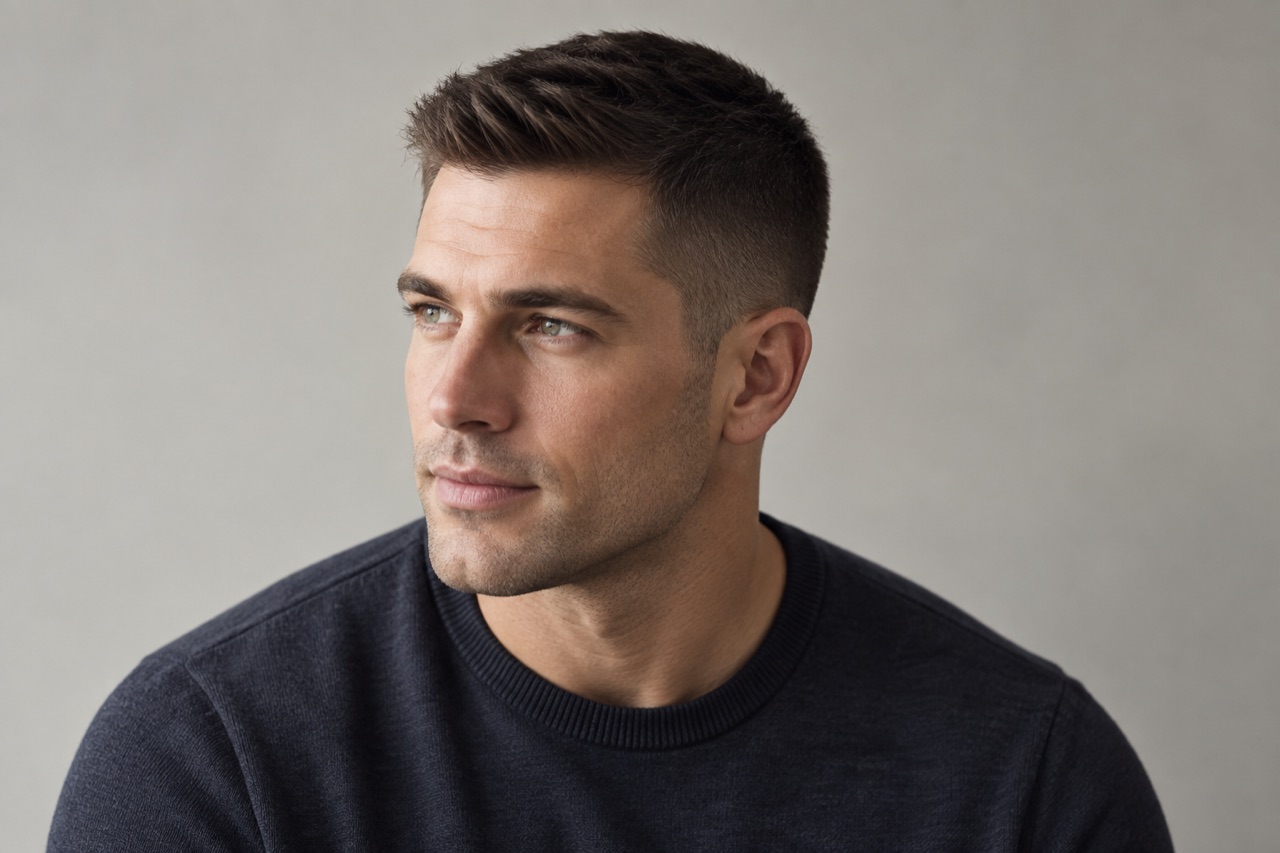
Who it works for
It is a practical option if you want a tidy short haircut with a little more control at the front than a buzz provides. Straight hair reveals the gradual top shape; wavy hair may need the front cut with its natural bend in mind. Fine hair often benefits from keeping a small amount of front length, while dense hair may need weight removed internally. If you dislike daily styling, keep the front low rather than building height. If you want a stronger change, first decide how much length and scalp exposure you are comfortable with rather than assuming shorter always looks cleaner. Whether you blow-dry, wear a cap or helmet, and can return for edge cleanup all affect the practical fit. Texture and cowlicks are cutting conditions to work with, not flaws that must be hidden.
How to choose
Look at the top from front to crown rather than judging only the side fade. A longer front can add shape but may separate from a high hairline; a flatter top feels understated and needs less daily control. Compare low taper, mid fade and scissor sides as separate options. Check the crown from above because a cowlick can make one short section stand up even when the reference lies flat. Put the reference beside your own front, side and back views and compare the outline, fringe or hairline boundary rather than the model's facial features. Pick the closest structural change, then decide how much daily styling and grow-out effort you are willing to accept.
Before the appointment
Show a front and side reference and point to the front length you want left after drying. Ask whether the top should be blended with scissors or clippers, then choose the side transition separately. Mention if you wear glasses, a cap or safety equipment that touches the crown. The barber can preserve a small front ridge without turning the cut into a tall flat-top or pompadour. Save one image you like and one counterexample, and be ready to explain the exact difference. Before the cut, confirm the dry length, wash-day direction and sections that must remain. An AI preview helps compare visual directions; it cannot replace a real consultation or establish a barber's cutting plan.
Living with the look
A crew cut dries quickly and often needs less product than a longer crop. If you want a slight lift, use a small amount of matte product after drying; do not expect a tall front without both length and styling. The sides gradually lose definition, so decide how sharp the taper should remain. A short top can still expose a crown whorl; ask for a shape that works when air-dried, not only after a barber finish. Daily care should support the actual crew cut structure, not reproduce a photographed finish. Start with a small amount of a tool or product suited to your texture; if one side grows faster, clean up that area instead of shortening everything. Set a trim rhythm by how crisp you want the outline to remain, not by a universal schedule.
Real limitations
A crew cut is not one standard clipper number and can range from nearly flat to a visible front brush. Very short versions reveal hairline and head contours, while longer tops require more styling. Dense growth at the crown may resist the intended profile. AI previews cannot confirm guard length, exact blend or how hair stands after washing, so discuss a cautious first version if uncertain. A real result also depends on length, growth direction, curl spring, head shape and the person cutting it. AI cannot guarantee a haircut or chemical service, or predict the exact result after washing, humidity or a full day. Treat the preview as a communication sketch; base the final plan on your own hair and an in-person assessment.
Mistakes to avoid
Do not use a uniform buzz-cut photo if you want the front-to-crown progression of a crew cut. A high fade is optional and can dominate a classic shape, while a flat-top has a different squared surface. Specify front length, top progression and side transition individually. These details let a barber keep the low-maintenance idea without copying an unrelated short haircut. Another common mistake is naming the cut without specifying its top, edge and side treatment. Before deciding, repeat back the version you chose, how much time you will spend styling it and which length must stay. A polished reference photo is a starting point for questions, not a promise of identical hair.