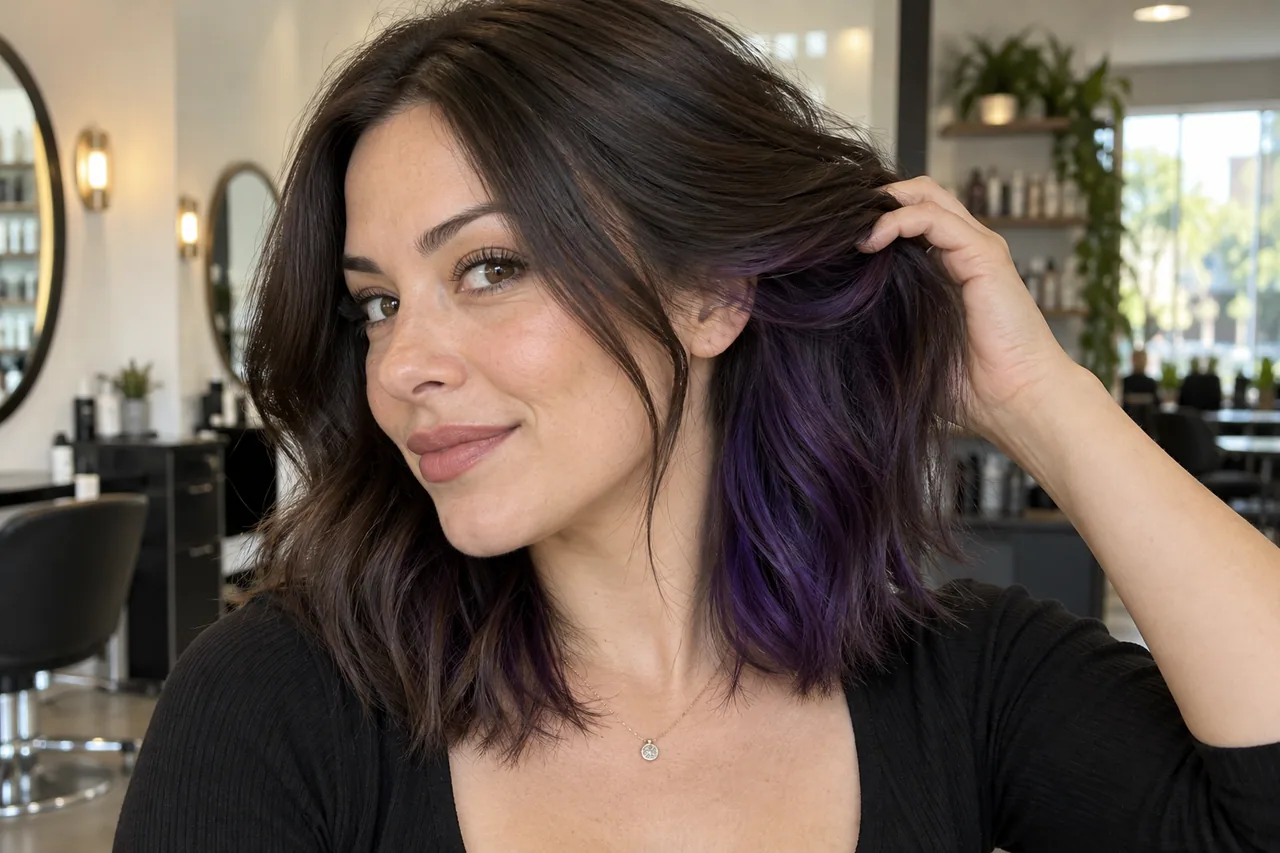
Who it works for
This technique can appeal to someone who wants color that can be revealed selectively. Longer hair provides more cover, but a bob can make a hidden panel visible whenever the ends swing. Very short hair may not have enough top layer to hide the color. Fine hair may show the underlayer more readily because there is less coverage; very dense hair can conceal it almost completely. Workplace flexibility, ponytail habits and willingness to bleach should influence the plan.
How to choose
Ask how the color looks in three states: hair down, hair tucked and hair tied up. A nape panel may stay discreet when down but become obvious in a bun. Behind-ear sections appear when you tuck the hair; face-adjacent panels are rarely truly hidden. Choose a shade after discussing your natural or existing color: vivid purple and blue often require pre-lightening on dark hair, while a deeper red or copper may read differently without it. Compare the reveal pattern, not only the swatch.
Before the appointment
Photograph your hair in indoor and daylight, then bring those images plus a marked diagram of where you want the color to start and stop. Tell the colorist about previous dye, henna or lightener because old pigment can affect lift. Ask whether a strand test is appropriate and what level of lightening the desired shade requires. In the AI preview, compare down and tucked poses; a single front-on picture may hide the most important placement decision.
Living with the look
Hidden does not mean maintenance-free. Bright pigments can fade with washing, heat and sun, while pre-lightened hair may need additional conditioning. Use products and wash intervals appropriate to your real hair, and discuss a refresh plan before committing. Roots are less obvious under a top layer, but a high-contrast panel can still show as it grows. When the shade fades, decide whether you are comfortable with the intermediate color or want a toner or recoloring appointment.
Real limitations
An AI preview cannot tell you whether your hair can safely reach the chosen shade, exactly how bleach will lift or how long a pigment will last. A hidden panel may be exposed by wind, exercise, a high ponytail or a short haircut. Do not promise yourself invisibility in every situation. If your hair is fragile or heavily processed, a clip-in color accent may be a lower-commitment way to test placement before chemical color.
Mistakes to avoid
The common mistake is choosing an exciting color without drawing its section. Another is assuming every dark base will show a saturated pastel without lightening. Avoid publishing a reference photo with a full-head color and calling it peekaboo; this guide is specifically about a concealed underlayer. Confirm placement, visible states, lift, fading and the exit plan before a salon appointment.