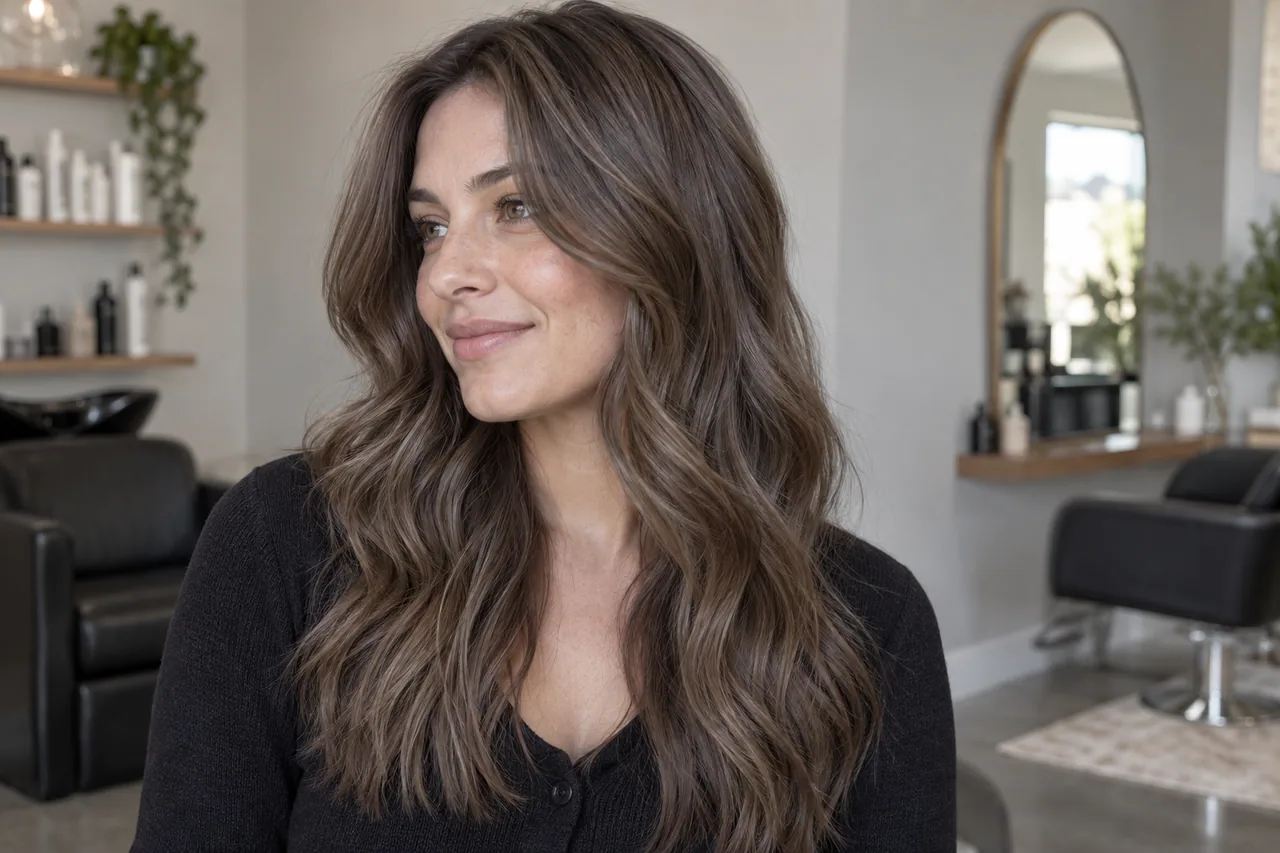
Ashy brown describes a brunette result with restrained cool or taupe reflection rather than red, orange or golden warmth. It is not one fixed dye number. The hero image illustrates a medium-depth cool brown in neutral light; on another starting color or under warm indoor lamps the same formula can appear different. Decide first how dark you want the base, then how cool you want the reflection and whether the color should be uniform or dimensional.
AI-made, theme-specific reference—not a customer result. Real cuts and colors depend on your hair and the service.
01 / Decision guide
Start with your own hair and routine
Who it works for
This guide is useful if your current brown looks warmer than you want or you are considering a quieter brunette change. Natural brown hair may reach some cool directions with a gloss, while darker dyed hair or a previously warm red-brown may need a different process. Very porous or lightened ends can grab cool pigment unevenly. Skin undertone is a comparison cue, not a strict rule: examine how the shade looks next to your face in both daylight and indoor light.
How to choose
Compare a cool light brown, a true medium ash and a dark mushroom brown before looking at a color chart. Ask whether you want a flat single process, soft highlights or a root shadow. A cool shade may look elegant on one photo but dull if it removes all contrast around your features. Use the preview to compare overall depth and placement, then inspect a real swatch on hair similar to your starting level. Avoid relying on a filter that makes the skin cooler too.
Before the appointment
Photograph your hair near a window and under your normal indoor light; include roots and ends. Tell the colorist about previous permanent dye, box color, henna and lightening. Ask what must happen to the existing warmth and whether a strand test is needed. If the desired result requires lift, discuss condition, maintenance and cost before booking. Bring a reference that shows the same depth as the desired color, not just a cool-tinted editorial photograph.
Living with the look
Cool reflections can fade or reveal underlying warmth as the hair is washed and exposed to heat or sun. A tone-maintenance product may help, but overusing pigmented shampoo can make porous ends dull or muddy. Follow a colorist's plan for your hair rather than a universal schedule. Gentle washing and heat protection protect condition, not a guaranteed shade. Roots may be low-contrast on some natural brunettes and obvious on lighter or gray starting hair.
Real limitations
AI cannot predict whether your current dye will lift, the exact chemical formula or how long the ash tone will remain. A photo may also make ashy brown appear nearly gray; on real hair the goal is usually a wearable cool brunette, not an opaque gray coating. If your hair is severely processed, a gentler gloss or postponing color may be more realistic than an aggressive correction. A professional consultation matters for complex color histories.
Mistakes to avoid
The common mistake is asking for 'ash' without specifying depth. Another is comparing photos taken under different white balance and concluding one formula is wrong. Avoid using purple shampoo as an all-purpose fix for orange undertones: pigment choice depends on the actual warmth and hair condition. Make a decision about depth, warmth, dimension and maintenance rather than chasing one filtered image.
02 / Specific comparisons
Eight distinct directions, with their trade-offs
Each option names a real structural or color difference and its cost. The hero illustrates one direction; it does not pretend to depict all eight.
01
Light ashy brown
A lighter brunette with a subtle cool veil can brighten the overall look without blonde contrast. Dark starting hair may require lift; on porous ends, the cool tone can grab unevenly.
02
Medium true ash brown
A balanced cool brown similar to the hero image, with enough depth to remain recognizably brunette. It can look much darker indoors, so compare in daylight before judging the result.
03
Dark mushroom brown
A deeper taupe-brown minimizes red reflections and can feel sophisticated with dark brows. Too much gray pigment can appear flat; ask for dimension if a solid block does not suit you.
04
Soft taupe brunette
A neutral-cool mix avoids an icy finish while reducing obvious copper. This may be easier to wear across lighting conditions, though a very warm starting color may still show through as it fades.
05
Ashy brown with root shadow
A slightly deeper root blends new growth into cooler lengths. It can reduce visible maintenance, but the transition should be soft rather than an accidental dark band near the scalp.
06
Ashy brown balayage
Cooler lightness is painted through selected strands instead of covering the whole head. It adds movement but may need pre-lightening, and the placement will be more visible when hair is tied up.
07
Cool brown gloss
A gloss can adjust reflection on a compatible existing brunette without a dramatic depth change. It is a lower-commitment test, but cannot turn very dark hair into light ashy brown.
08
Dimensional ash brunette
Mix close cool-brown depths to avoid a flat result. This can make waves and layers more readable; contrast should stay modest if your goal is a natural-looking brunette.
03 / Next step
Preview a direction, then discuss the real service
Use a clear, hairline-visible photo in the generator and select the closest style or describe the direction. AI helps compare silhouette and color; it cannot guarantee a real cut, lightening result or wear time.