Italian Bob Haircut: 8 Shapes to Compare Before You Cut
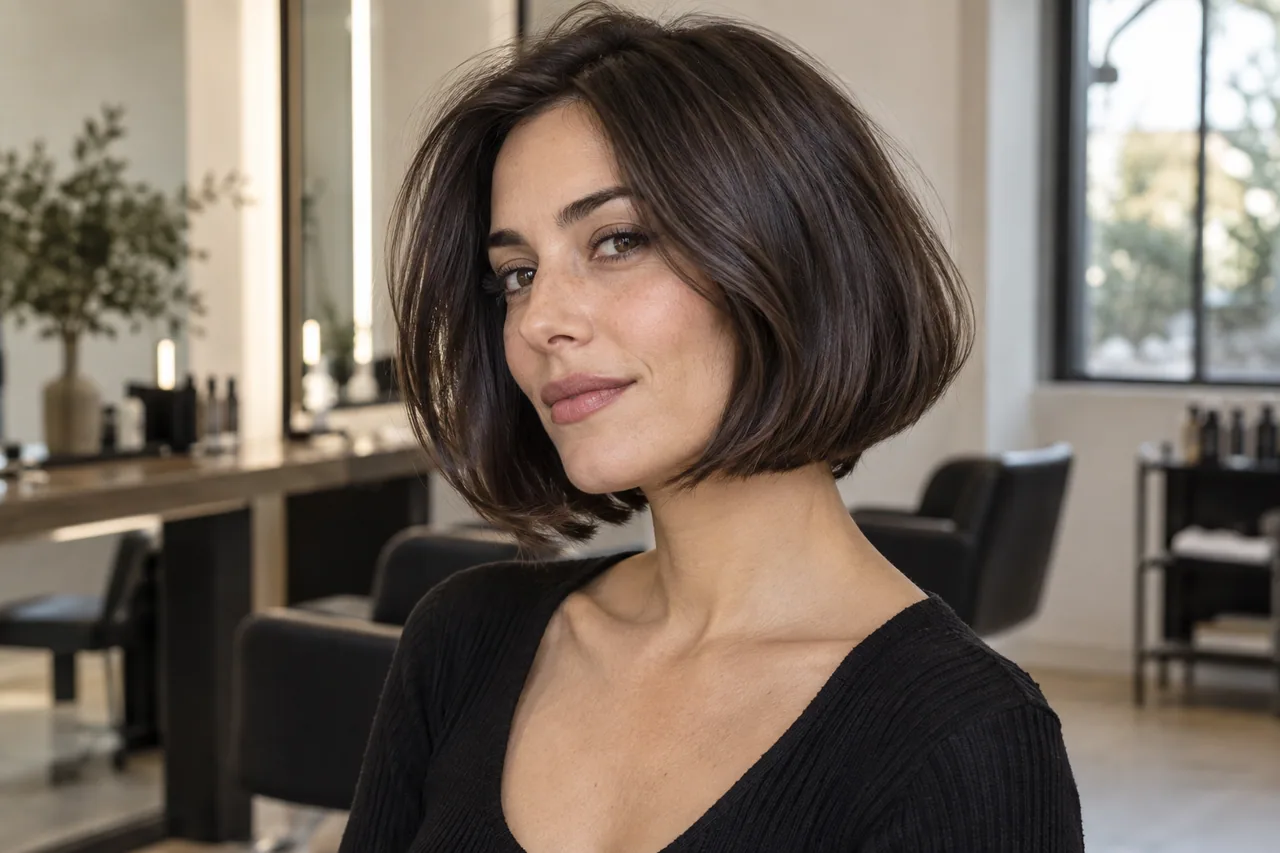
The Italian bob is a full-looking, mobile bob rather than a severe ruler-straight line. Its generous ends and soft movement are the point. On a reference model it may appear effortless, but the same perimeter can sit very differently on fine, dense or naturally curly hair. Decide first whether the line should meet the jaw, fall below the chin or approach the shoulders; a few centimeters can change how the cut frames your face and whether it tucks behind your ears.
AI-made, theme-specific reference—not a customer result. Real cuts and colors depend on your hair and the service.
01 / Decision guide
Start with your own hair and routine
Who it works for
Consider this cut if you want a short, substantial outline that can look dressed up without becoming rigid. Medium-density straight or softly wavy hair often shows the intended fullness readily, while fine hair may need a compact, less layered edge. Dense hair may need careful internal weight management so the rounded shape does not become triangular. Curly hair can take inspiration from the silhouette, but shrinkage means the wet cutting length is not the finished length.
How to choose
Place a finger at your preferred dry hemline and inspect both your face and neck in profile. A jaw-length version highlights the lower face, while a slightly longer version leaves more room to tie or tuck the front. Compare a center part with a loose off-center part and decide how much lift you will actually style. Unlike the Scandi bob, this direction deliberately keeps a fuller, softer finish rather than an extremely pared-back line.
Before the appointment
Bring photographs showing front, profile and the back of a bob, not only one editorial angle. Ask the stylist where the corners will sit when the hair is dry, and whether your natural part will change the hemline. If your hair is longer, pin it to the proposed length for a day before committing. In the AI try-on, compare at least a jaw and below-chin version and inspect the ears and neck—not just the face.
Living with the look
A rounded bob normally benefits from deliberate drying at the roots and under the ends, although a soft natural wave can also support it. Use light product first; too much oil or cream can collapse fine hair. Recheck the nape after washing because a heavy back section changes the profile. The perimeter grows out visibly, so plan trims according to how exact you want the jaw line to remain. Tucked sides may need shorter face pieces controlled with a pin.
Real limitations
No image can promise the same salon volume on every hair type. A single-length line may puff out on dense hair, while excessive layers can erase the signature full edge. If you need to wear a high ponytail daily, a jaw bob may be impractical. A preview also cannot reveal the weight of wet hair, exact curl shrinkage or how the cut will behave after sleeping; confirm those points with your stylist.
Mistakes to avoid
Do not ask simply for 'an Italian bob' without agreeing on dry length, edge weight and parting. Another common error is choosing a reference photographed with a large round-brush blowout when you air-dry every day. Avoid assuming that a shorter bob always makes fine hair look thicker: a poor edge can reveal gaps. The eight options below make the trade-offs explicit so you can choose a workable version.
02 / Specific comparisons
Eight distinct directions, with their trade-offs
Each option names a real structural or color difference and its cost. The hero illustrates one direction; it does not pretend to depict all eight.
01
Jaw-grazing full Italian bob
A rounded edge meets the jaw and makes the full perimeter unmistakable. It is striking from the side but loses ponytail length. Check whether the front corners hit the jaw where you want them after drying.
02
Below-chin Italian bob
Lowering the line a few centimeters softens the commitment and can leave more ear-tucking room. It can look less compact on a long neck; compare the profile, not only a face-on selfie.
03
Loose off-center Italian bob
Shift the part slightly to create effortless lift without a deep side sweep. The shape works when your natural part cooperates; a strong cowlick may make one side much fuller than the other.
04
Soft side-swept Italian bob
A deeper sweep adds volume above one cheek while retaining the full bottom line. It can look polished in photos, but you may need to reset the front after wind or when wearing glasses.
05
Fine-hair compact bob
Keep the ends solid and remove only enough internal weight to prevent a flat top. This prioritizes density over elaborate movement. Ask for a dry-edge check because over-layering can turn a full bob wispy.
06
Dense-hair softened bob
Manage bulk within the shape while preserving a visibly rounded edge. It can reduce a triangular profile, but aggressive thinning near the surface can create flyaways and make the finish harder to smooth.
07
Naturally wavy Italian bob
Allow gentle bends to create the relaxed volume rather than forcing perfect symmetry. Set the dry length with wave spring in mind; one side may shrink more, so judge the final shape in your usual part.
08
Collarbone-length Italian-inspired lob
Keep the generous ends and soft swing while stopping near the collarbone. It offers more tying flexibility, but it is no longer the compact classic bob. Choose it when daily practical length matters more than the label.
03 / Next step
Preview a direction, then discuss the real service
Use a clear, hairline-visible photo in the generator and select the closest style or describe the direction. AI helps compare silhouette and color; it cannot guarantee a real cut, lightening result or wear time.