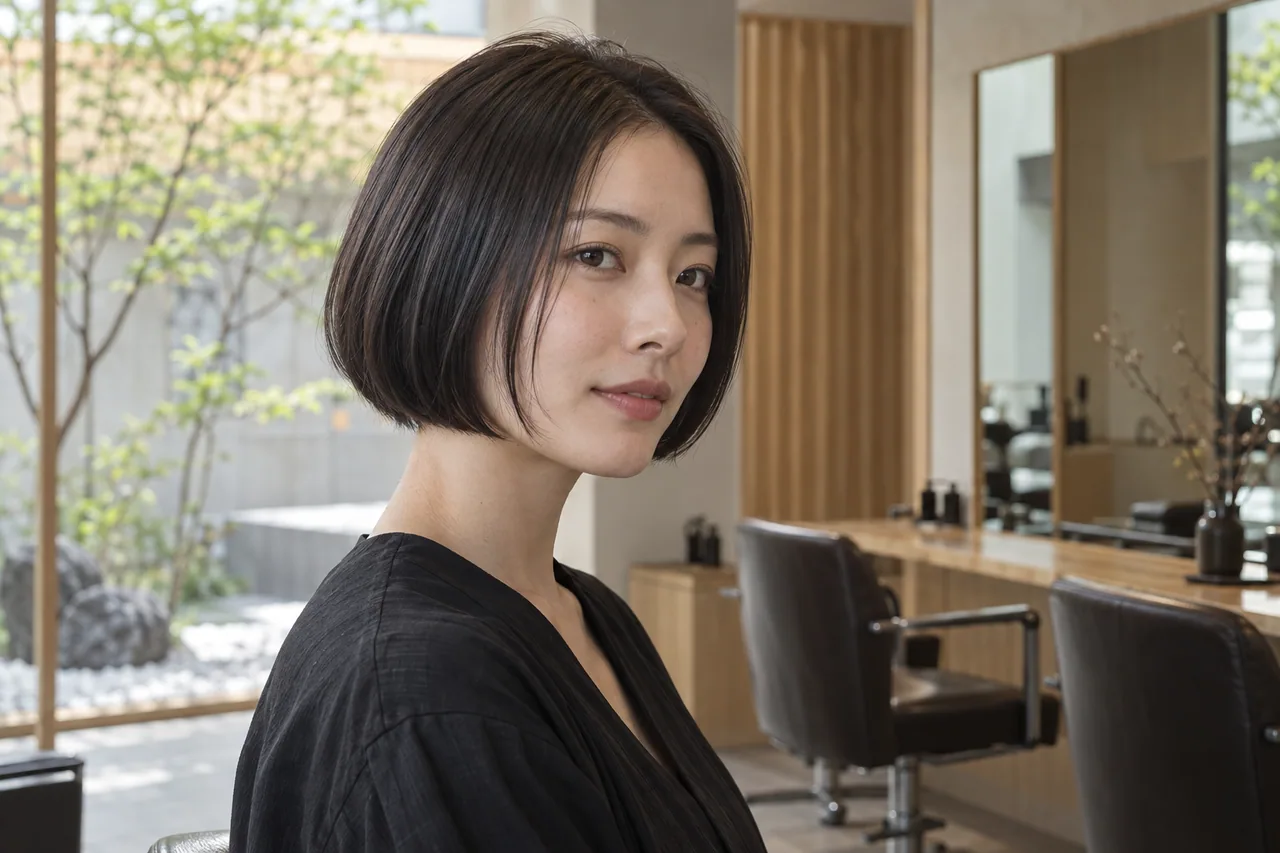
'Japanese bob' is a search label covering several precise, compact bob silhouettes, not one technical haircut or a rule about who may wear it. This guide focuses on a tidy jaw-to-chin outline, a controlled nape and optional soft face-framing detail. The photo shows one rounded, fringe-free example. Decide whether you want a curved edge, a sharper straight line or an airy fringe; these features have different styling needs and should not be bundled into a vague request.
AI-made, theme-specific reference—not a customer result. Real cuts and colors depend on your hair and the service.
01 / Decision guide
Start with your own hair and routine
Who it works for
A compact bob may suit someone who enjoys a clean side profile and is comfortable with frequent enough trims to maintain the nape. Straight and gently wavy hair often makes the line visible with relatively little product. Fine hair needs enough edge weight to avoid holes. Very dense hair may need carefully placed internal shaping, while tight curls require a dry-length plan that accounts for shrinkage. The label does not make a cut universally flattering; your ear placement, neck and routine matter.
How to choose
Look at the silhouette from ear to nape. A tucked-under line creates a rounder impression; a straight line feels more graphic. Decide whether the front corners should reach the jaw or sit nearer the cheek. If you wear glasses, test where the arms meet the side hair. Compare this with the Scandi bob's more relaxed spare line and the Italian bob's fuller swing. A fringe can complete the shape but adds a separate maintenance schedule.
Before the appointment
Bring a reference that clearly shows the nape and one that shows the front, plus an unstyled photo of your own hair. Explain your normal part, whether you tuck behind the ears and how often you can return for trims. Ask for a dry check around both ears because a tiny difference is noticeable on a compact cut. A virtual preview can help with broad outline and fringe choice but cannot tell the stylist the exact cutting angle.
Living with the look
A small bob can often be smoothed quickly, but the rear contour can lose definition as soon as the nape grows. Use a light brush or fingers to place the front, then check the profile rather than styling only in the mirror straight on. Keep the ends hydrated without coating fine strands heavily. If you choose a curved line, expect to maintain its direction after sleep or humidity. The shorter the version, the more often growth changes its identity.
Real limitations
Do not assume a bob photographed on very straight hair will dry identically on your wave or curl pattern. A sharply tucked nape may require a skilled cut and regular maintenance. Short front pieces can become awkward with glasses or masks. AI previews are especially poor at showing exact nape geometry and the feel of hair against the ears; use them to choose a direction, then discuss feasibility in person.
Mistakes to avoid
The biggest mistake is using a broad geographic nickname as a complete cutting instruction. Specify dry length, amount of curve, nape height and fringe instead. Avoid asking for an ultra-neat outline while also saying you never want trims. Do not let the back disappear from the conversation; with a compact bob, the nape often determines whether the shape reads precise or overgrown.
02 / Specific comparisons
Eight distinct directions, with their trade-offs
Each option names a real structural or color difference and its cost. The hero illustrates one direction; it does not pretend to depict all eight.
01
Rounded jaw-length Japanese bob
The ends turn gently inward and the front reaches the jaw. This feels compact without exposing the whole ear, but it needs balanced weight at the nape to avoid a helmet-like curve.
02
Straight-line Japanese bob
A cleaner horizontal edge reduces the rounded effect and highlights a precise jaw line. It can be striking, but naturally bent ends may need a quick smooth after washing.
03
Cheek-framing compact bob
Slightly shorter front pieces emphasize the cheek area and can make the silhouette feel lighter. They may not tuck behind the ear, so consider glasses and face coverings.
04
Softly tapered nape bob
A tidy rear shape removes bulk where hair meets the neck. It improves the profile on dense hair but grows out conspicuously; ask how often the nape should be refreshed.
05
Airy-fringe Japanese bob
A sparse fringe adds a forehead detail without a heavy block. It creates two upkeep zones—the fringe and the perimeter—and may split over a strong cowlick.
06
Fringe-free side-part bob
Leave the forehead open and shift the part subtly for movement. This may be easier to style, but a strong part can make one side visually heavier; inspect both profiles.
07
Fine-hair compact bob
Keep the cut near a single length with a reliable bottom edge. It makes sparse ends less obvious, though the very short perimeter still needs accurate trimming.
08
Natural-wave Japanese-inspired bob
Retain the compact intent while allowing a gentle bend. Agree on the dry, sprung-up length; forcing a perfectly straight reference onto wavy hair can lead to too much daily heat.
03 / Next step
Preview a direction, then discuss the real service
Use a clear, hairline-visible photo in the generator and select the closest style or describe the direction. AI helps compare silhouette and color; it cannot guarantee a real cut, lightening result or wear time.