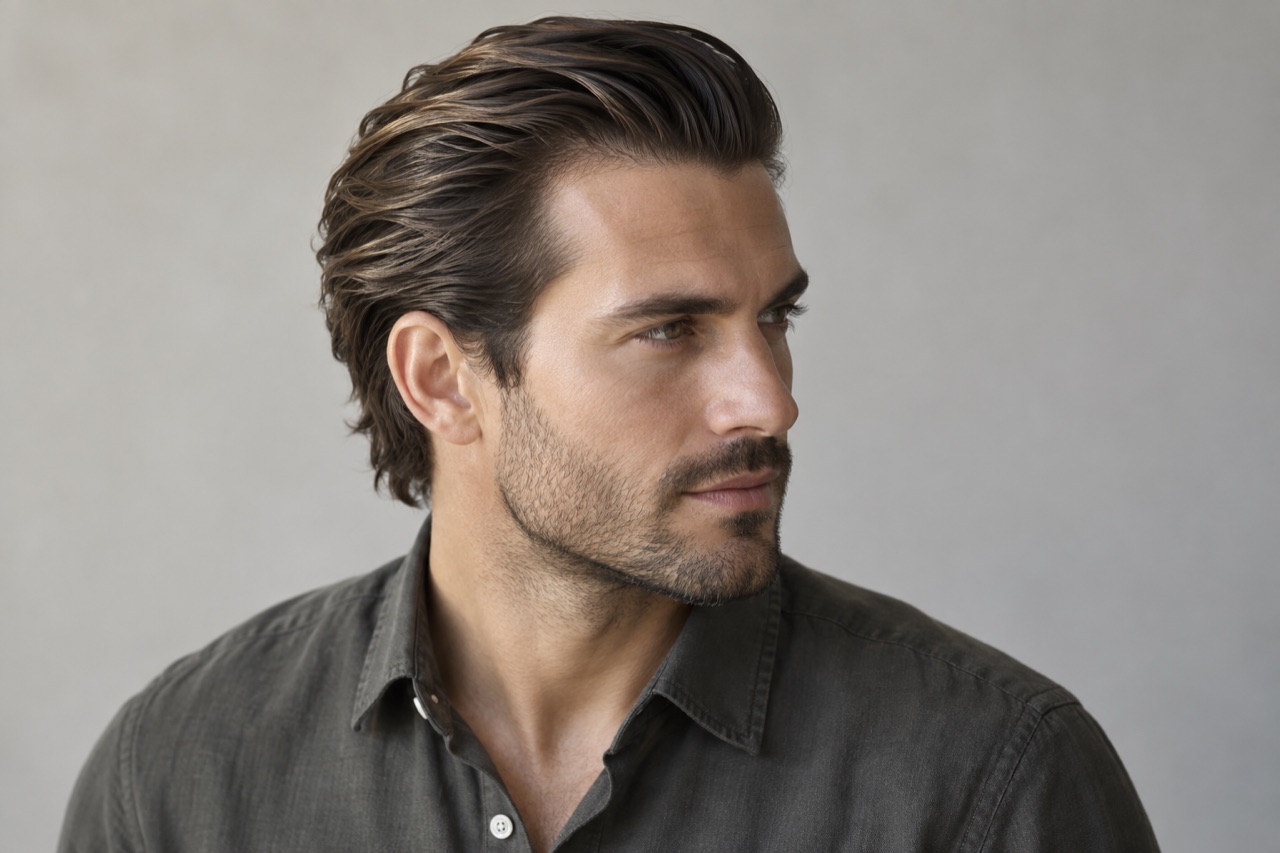
Who it works for
Choose it if your front and crown naturally travel backward or you are willing to train them with drying. Straight and wavy hair can both work, though dense hair may need more control and fine hair can flatten under heavy pomade. A receding or uneven hairline is not a prohibition, but pushing everything tightly back may expose it more. A loose side part can be a more comfortable alternative. If you want a stronger change, first decide how much length and scalp exposure you are comfortable with rather than assuming shorter always looks cleaner. Whether you blow-dry, wear a cap or helmet, and can return for edge cleanup all affect the practical fit. Texture and cowlicks are cutting conditions to work with, not flaws that must be hidden.
How to choose
First compare how much forehead remains uncovered: a loose sweep leaves pieces at the hairline, while a tight comb-back reveals the full front edge. Then choose a natural part, a side part or no visible part and decide between dry texture and sheen. Look at the crown from above; direction changes can create a split or cowlick that a straight-on selfie will not show. Put the reference beside your own front, side and back views and compare the outline, fringe or hairline boundary rather than the model's facial features. Pick the closest structural change, then decide how much daily styling and grow-out effort you are willing to accept.
Before the appointment
Bring a photo showing your actual hairline and crown, then say whether you style with a dryer every morning. Ask the barber to leave enough front length to travel back and to connect the sides without creating a hard undercut unless you want that contrast. Discuss the finish separately: a haircut can support either a dry modern sweep or a more polished comb-back. Save one image you like and one counterexample, and be ready to explain the exact difference. Before the cut, confirm the dry length, wash-day direction and sections that must remain. An AI preview helps compare visual directions; it cannot replace a real consultation or establish a barber's cutting plan.
Living with the look
A dryer can direct the roots before product is added; applying a heavy product to wet hair often makes it collapse. Begin with a small amount and add only if the sides escape. Brush or comb choice changes separation, so compare a finger-finished result with a fine-tooth comb. Wash product out according to its formulation and reset the roots after sleep rather than layering on more each day. Daily care should support the actual slick back structure, not reproduce a photographed finish. Start with a small amount of a tool or product suited to your texture; if one side grows faster, clean up that area instead of shortening everything. Set a trim rhythm by how crisp you want the outline to remain, not by a universal schedule.
Real limitations
The term does not guarantee a high-volume pompadour or a glossy vintage finish. Short or forward-growing hair may resist the direction; a high-shine product can emphasize scalp visibility on fine hair. Tight combing may reveal the hairline, and humidity can undo the shape. AI previews cannot show hold, feel, residue or how the style behaves after a full day. A real result also depends on length, growth direction, curl spring, head shape and the person cutting it. AI cannot guarantee a haircut or chemical service, or predict the exact result after washing, humidity or a full day. Treat the preview as a communication sketch; base the final plan on your own hair and an in-person assessment.
Mistakes to avoid
Do not treat slick back as a synonym for an undercut: one is a styling direction, the other is a side-length contrast. Another mistake is choosing a reference with a high pompadour when you want low volume. Decide the root height, part, exposed forehead and finish first, then select a cut with enough length to support those choices. Another common mistake is naming the cut without specifying its top, edge and side treatment. Before deciding, repeat back the version you chose, how much time you will spend styling it and which length must stay. A polished reference photo is a starting point for questions, not a promise of identical hair.