Choose the source for this shot
Choose food that should actually be hot. Keep toppings and utensils visible enough to count; steam should not be used to hide a poorly resolved source.

Steam can convey warmth without cutting, pouring or adding hands. A bowl with a clear rim and space above it is a simpler starting point than a crowded dining scene.
Open this shot in the video workspace ↗Opens an editable prompt and settings. Add your own references if needed; nothing is uploaded or generated by this link. Check the current credit estimate before submitting.
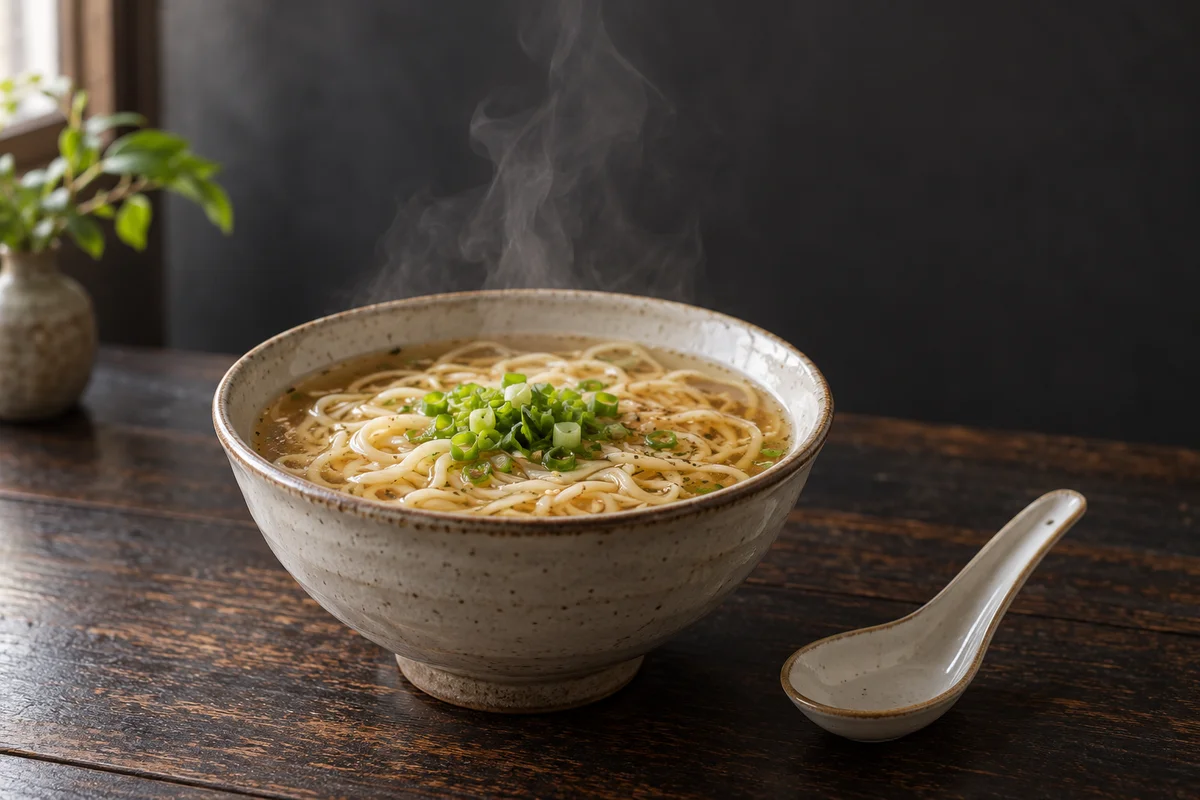
The bowl rim, spoon and garnish give stable details around the area where a small steam action can be planned.
Steam belongs to the hot food, while the utensil and vessel should remain coherent. This is an AI-created still, not a generated video result.
Choose food that should actually be hot. Keep toppings and utensils visible enough to count; steam should not be used to hide a poorly resolved source.
Request a thin wisp rising and dispersing above the food. Keep the soup surface calm; bubbling would imply a different temperature and changes more of the image.
Use a fixed close view with the upper background visible. Back or side light makes a light wisp readable; excessive camera travel can turn the bowl rim into a moving target.
Start with a dish photographed the way it is actually served. The bowl rim, utensil and garnish should be distinct. Choose a hot dish if steam belongs in the scene; adding steam to a chilled dessert can communicate the wrong preparation.
Make a six-second fixed shot with a narrow, slowly rising wisp. Keep the soup surface and bowl in place. Watch where steam begins: it should rise from the food rather than the table or spoon handle. Then check whether the effect obscures the dish at small display size. A quieter wisp can make the ingredients easier to read.
Steam is a restrained first treatment for soup or a hot drink. Pouring, cutting and a hand lifting a utensil introduce contact and changing shapes. Make those separate concepts with suitable source material; do not stack all of them on the first dish image.
Watch whether steam starts at the food, disperses naturally and leaves the rim intact. Check that garnish, noodle shape and spoon do not melt or multiply underneath it.
If steam resembles smoke, ask for a thinner, slower wisp and remove dramatic atmosphere terms. If utensils change, simplify the source rather than increasing motion.
Make this food delicious with steam, pouring and a spoon.
Choose steam as the only change first. Pouring and lifting introduce new objects, contact points and changing portions that need separate review.
Copy it or open it in the workspace to edit. Replace the subject details to match your own source.
Use the food reference. A thin delicate wisp of steam rises from the hot soup and gently disperses. Bowl, spoon, noodles and garnish stay still. Fixed close camera, soft side light, calm background, one appetizing continuous shot.
Writing example; adapt it to your reference. This is not a claim that these words guarantee an output.
You can describe it, but the image may not show the vessel, hand or space the action needs. For a more judgeable attempt, prepare a source where those relationships are clear. Inspect where the liquid lands and whether the serving amount changes. Generated motion should not misrepresent the real portion.
Content reviewed: