Have these ready
Define the character’s silhouette, colors, proportions and one distinctive accessory. Decide which views the next project actually needs.

Design and illustration
List the character’s silhouette, colors, clothing and signature detail before changing poses. Use an approved reference image as a visual anchor.
You choose your own source and review the current cost before generation.
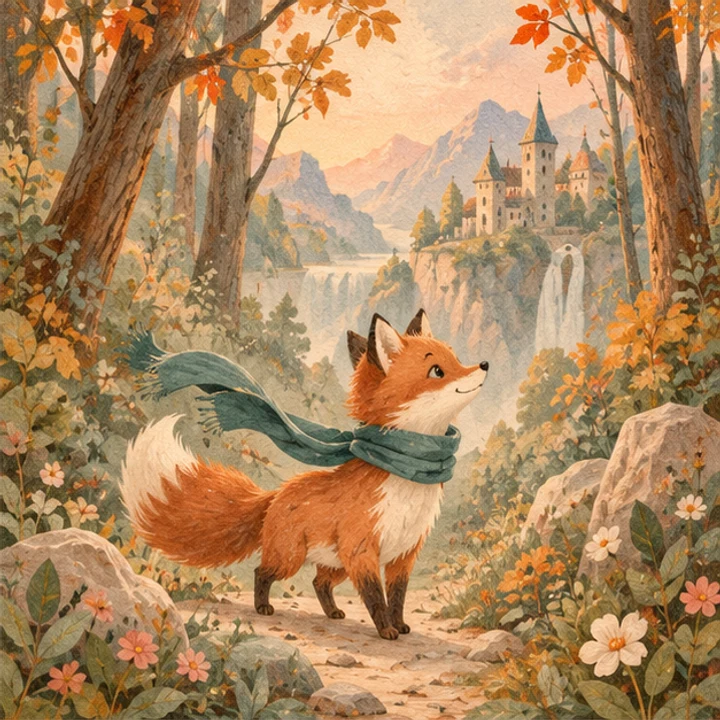
A generated sheet may contain inconsistent views. Inspect each view separately and do not assume a front and side image describe the same construction.
Compare the smallest recurring cues, such as scarf color or ear shape. Reject variants that change those before building a story sequence.
Open my creative starting point ↗Define the character’s silhouette, colors, proportions and one distinctive accessory. Decide which views the next project actually needs.
Approve one clean main view before making extra angles. Arrange the candidates on a labeled sheet in an editor and compare head-to-body ratio, costume details and color placement. Reject a view that looks like a redesign, even if it is attractive by itself.
Keep the sheet functional: a few reliable views are more useful than many contradictory expressions and costumes. Add missing views when a specific scene requires them.
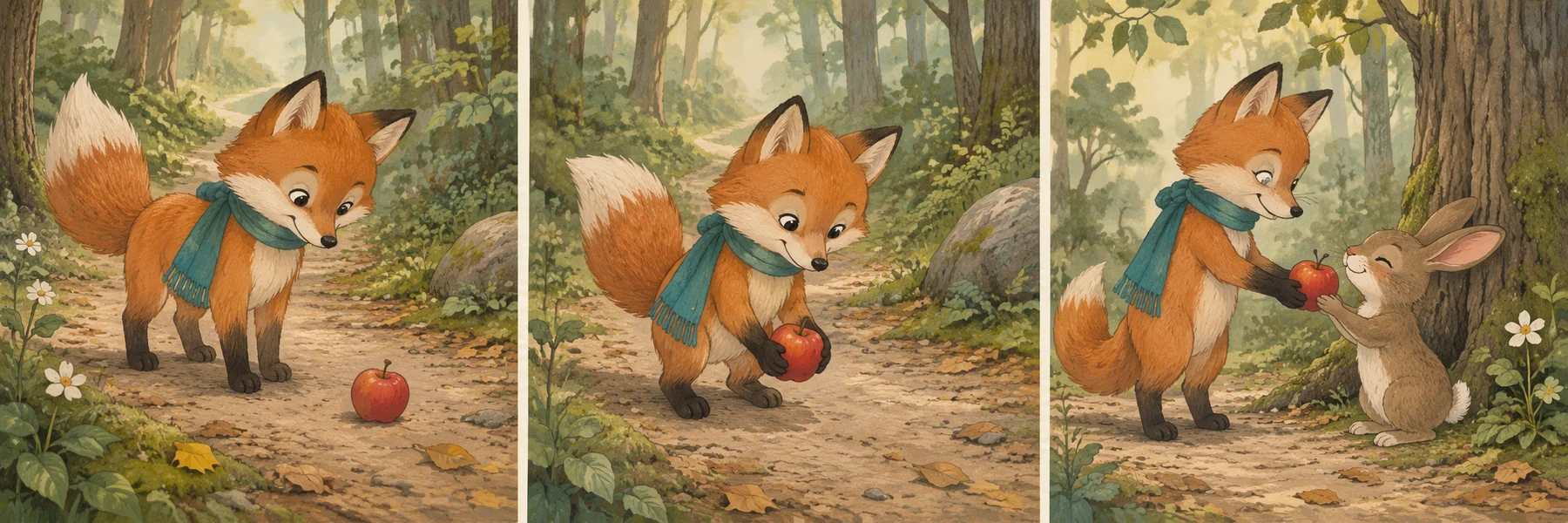
Why consider this directionThe illustrated fox and scarf provide concrete character cues while the woodland setting supplies room for a small story action.
Check before choosingCompare outline, costume color and body proportions across later images. A still reference does not demonstrate generated motion.
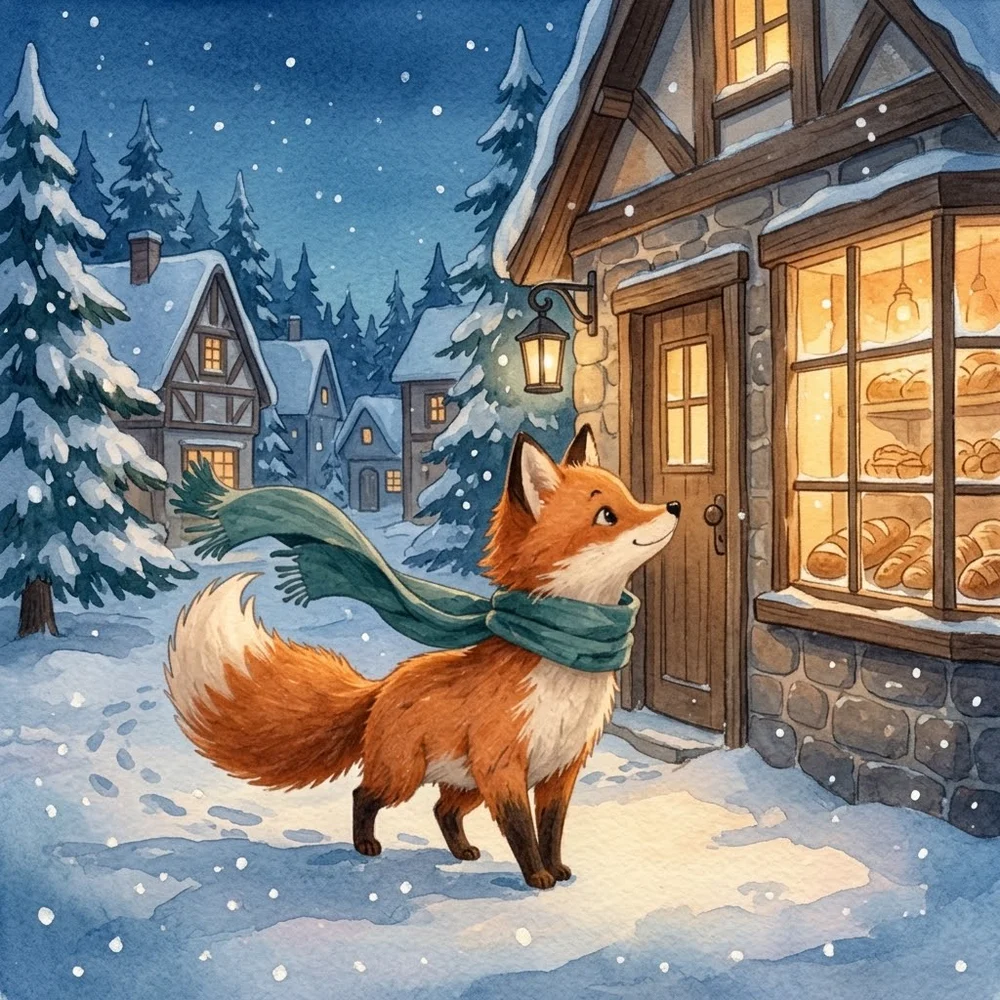
Why consider this directionAnother illustrated scene can help you consider how the character occupies space and relates to the environment.
Check before choosingMatch identity cues deliberately rather than assuming a shared storybook label ensures continuity. Inspect scarf, ears and face shape.
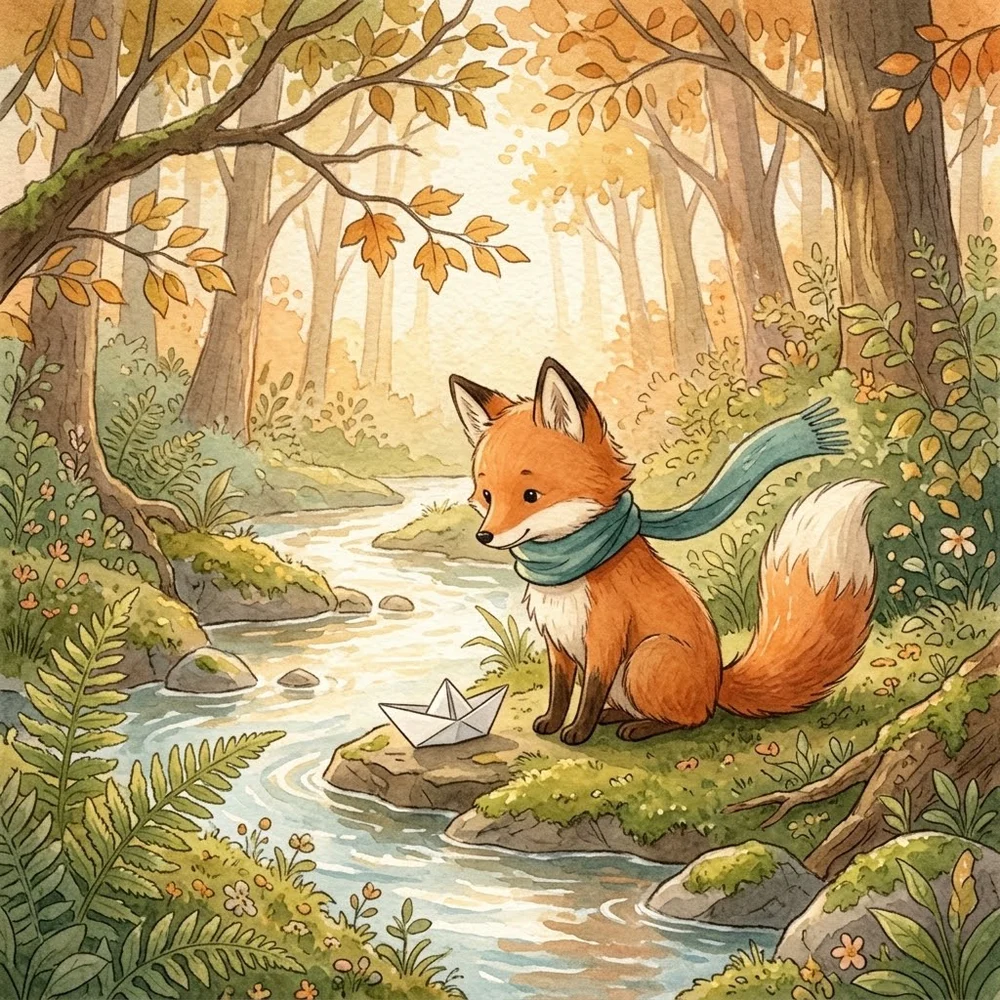
Why consider this directionA separate story image offers a composition reference for scale, scene depth and the placement of an illustrated character.
Check before choosingCompare it with the approved character sheet before treating it as part of a sequence. Independent examples are not a verified multi-scene identity test.
Treat generated views as candidates requiring consistency review. Exact orthographic relationships, measurements and model-ready geometry need a controlled design workflow. Mark the sheet’s approved and exploratory views separately so collaborators know which details to follow.
Content reviewed: