Have these ready
Create a character reference with colors, silhouette and a distinctive accessory. Outline three scenes before generating them.

Design and illustration
Name the character's stable cues before describing the new scene. In the fox example, the cream muzzle, tail tip and teal scarf are useful anchors across different settings.
You choose your own source and review the current cost before generation.
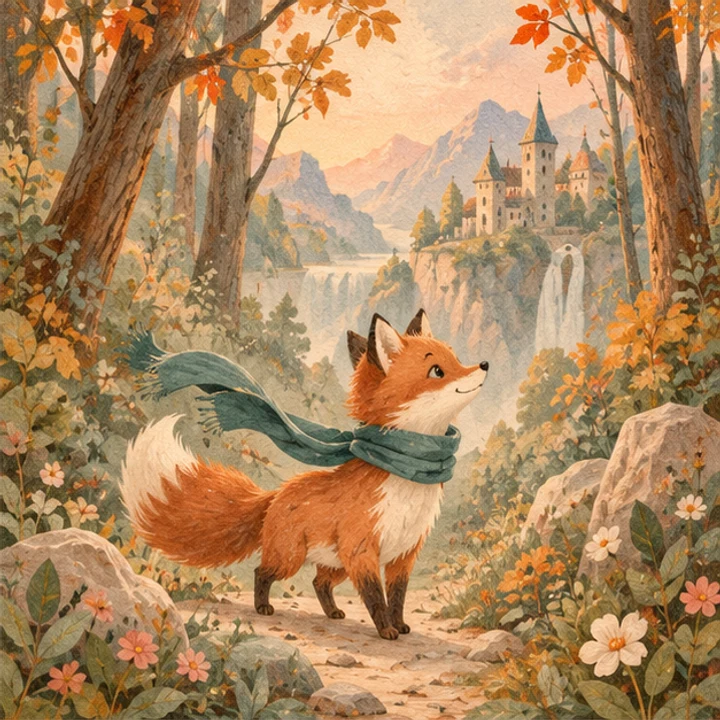
Count limbs and compare proportions on every page. A matching scarf alone does not establish a consistent character.
Write down the character's distinguishing traits before making another scene: fur color, scarf, proportions and expression. Compare those traits across images. A matching accessory alone is not enough if the face or body changes between pages.
Open my creative starting point ↗Create a character reference with colors, silhouette and a distinctive accessory. Outline three scenes before generating them.
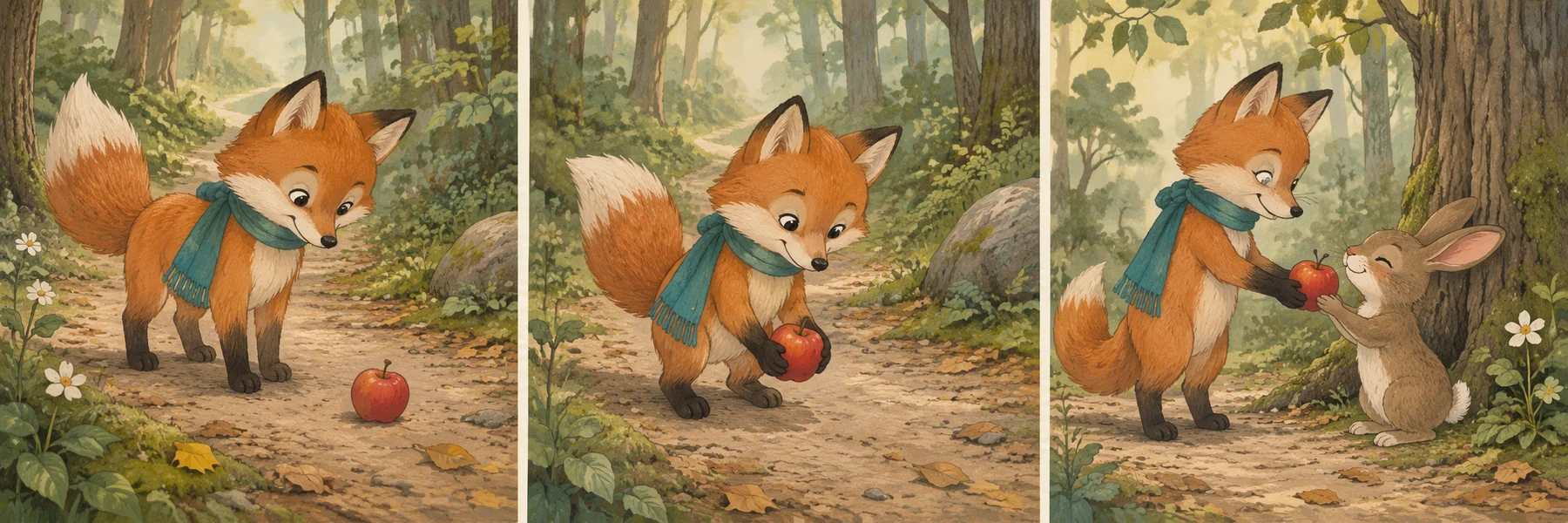
Approve one character view, then use it to guide the next scene while keeping the descriptive identity cues stable. Compare face shape, costume and relative size across all three images on one sheet. Fix the outlying scene before adding lettering or page decoration.
Change the action and environment while retaining identity. If the story needs a different age or costume, introduce that change deliberately rather than letting it appear by accident.
Why consider this directionThe illustrated fox and scarf provide concrete character cues while the woodland setting supplies room for a small story action.
Check before choosingCompare outline, costume color and body proportions across later images. A still reference does not demonstrate generated motion.
Why consider this directionAnother illustrated scene can help you consider how the character occupies space and relates to the environment.
Check before choosingMatch identity cues deliberately rather than assuming a shared storybook label ensures continuity. Inspect scarf, ears and face shape.
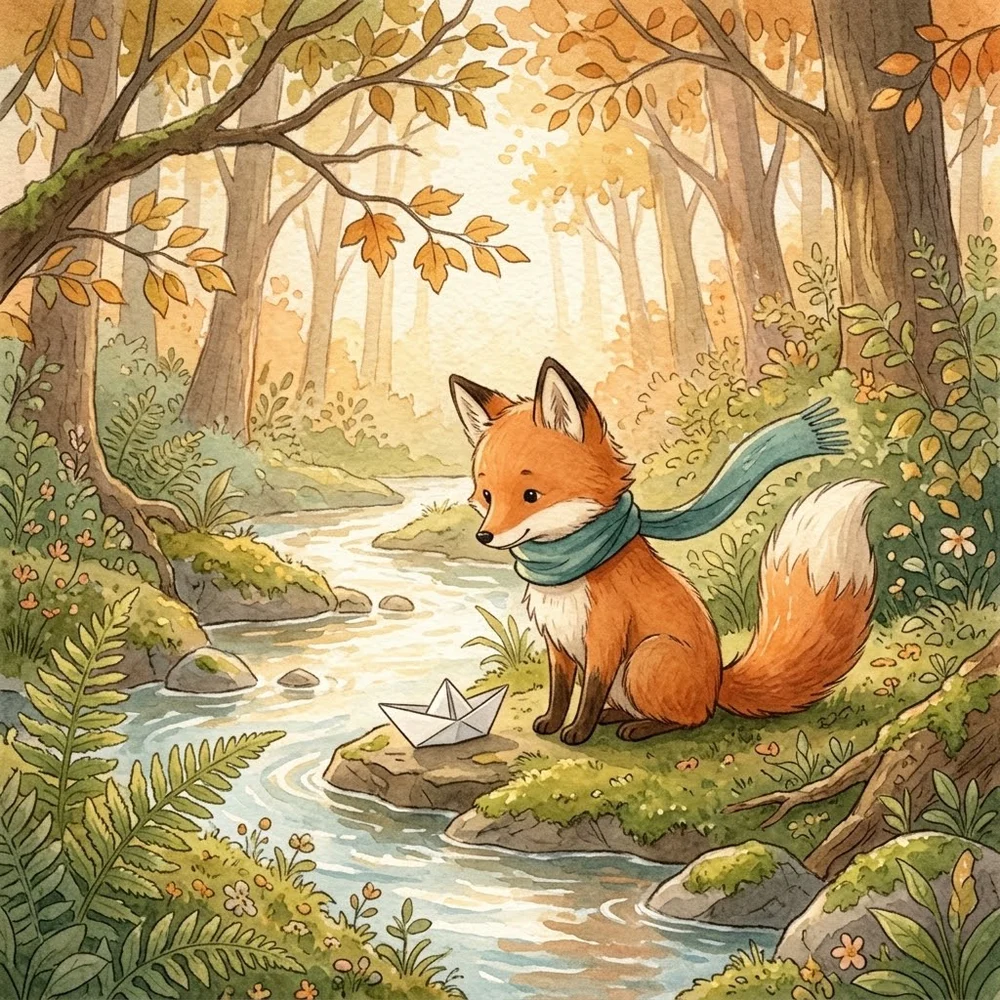
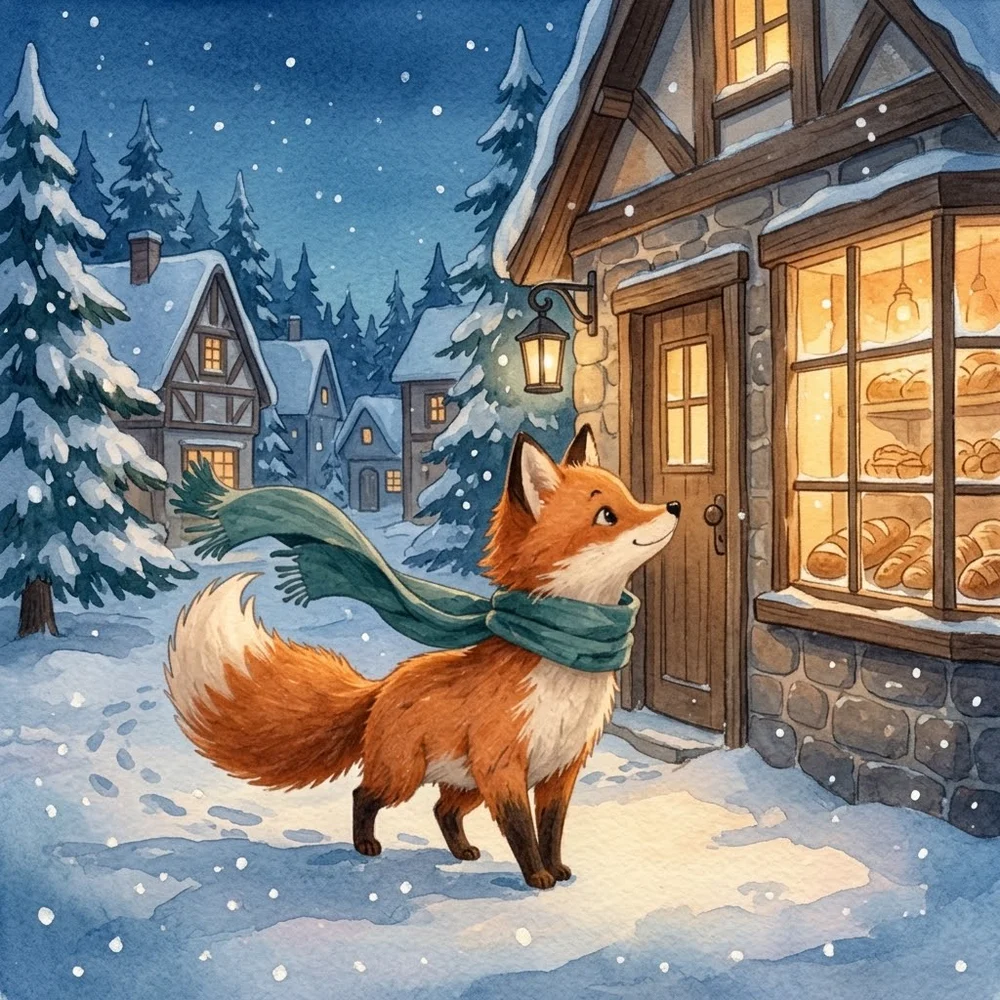
Why consider this directionA separate story image offers a composition reference for scale, scene depth and the placement of an illustrated character.
Check before choosingCompare it with the approved character sheet before treating it as part of a sequence. Independent examples are not a verified multi-scene identity test.
A repeated description helps organize the brief but does not lock the output. Keep reference images, inspect each scene and accept that a new angle can change details. A story series needs editorial selection, not just the same style name on every request.
Content reviewed: