
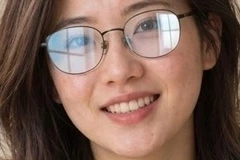
More visible lens reflections
Glasses glare only
The input lens reflections are AI-simulated and the eyes remain visible. Enlarge the lenses to compare glare and inspect eyes and frames.
Edit with these settings ↗
Reduce distracting eyeglass reflections while retaining the glasses and natural gaze. This entry selects only the glasses-glare correction. It addresses reflections where the underlying eyes remain visible; removing the glasses is a different task.
Edit my photo ↗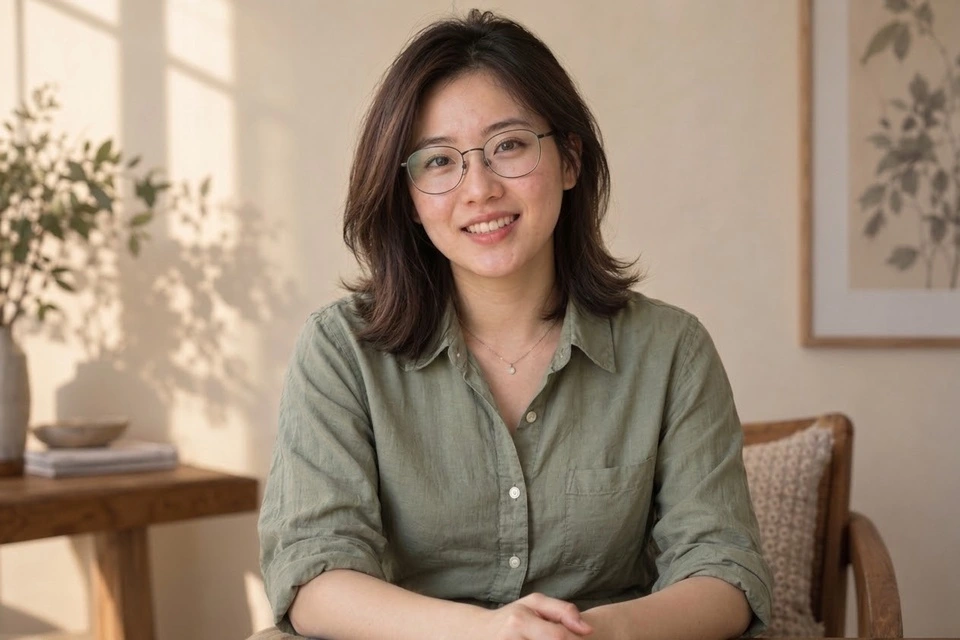
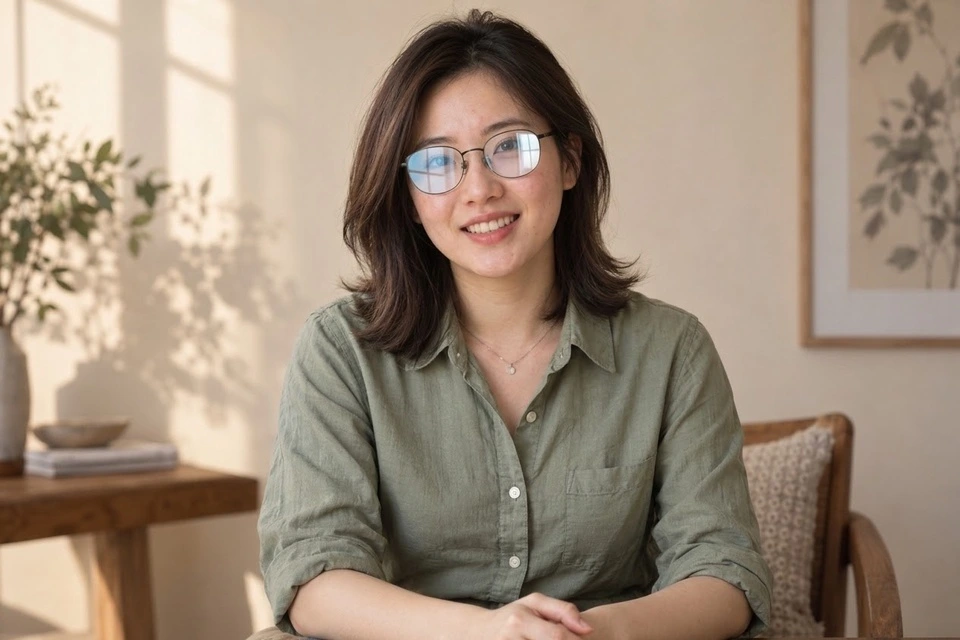
Glasses glare only
The input lens reflections are AI-simulated and the eyes remain visible. Enlarge the lenses to compare glare and inspect eyes and frames.
Edit with these settings ↗

Portrait retouch → Glasses glare only
Enlarge the lenses to inspect reflections. The eyes were already visible; check the frame and eye details.
Edit with these settings ↗The source portrait is AI-generated. The result was actually generated through our editor using Nano Banana 2.1. These are examples; results vary with the photograph.
Light lens reflections with readable eyes are a more suitable starting point. A white highlight completely covering a pupil hides information that cannot be reliably recovered. Retaining the frame, pupil position, gaze and lens transparency matters more than making lenses look blank. This page does not promise to recover hidden eye details.
Use a sharp original portrait and examine both eyes. Avoid a severely overexposed version. If glare is the only issue, leave unrelated skin and clothing corrections unselected.
Reduce distracting lens reflections; keep the frames, visible eyes and gaze. Do not invent obscured eye details.
Edit my photo ↗Upload one clear photograph. This page’s entry selects the matching feature.
Confirm the preset or corrections. Required descriptions and target colours must be filled in; other settings expand on demand.
Check the cost and submit. Select the edited result to continue editing, or download it.
The editor shows the required credits and checks your balance before submission. An insufficient balance opens a recharge prompt. Compatible choices use one task; another generation is a separate task.
The selected instruction asks to keep the glasses and reduce reflections only. Choose free editing for removing an entire object.
Results are limited when the original has no readable eye detail. Another photograph or a new capture is usually preferable for a formal portrait.